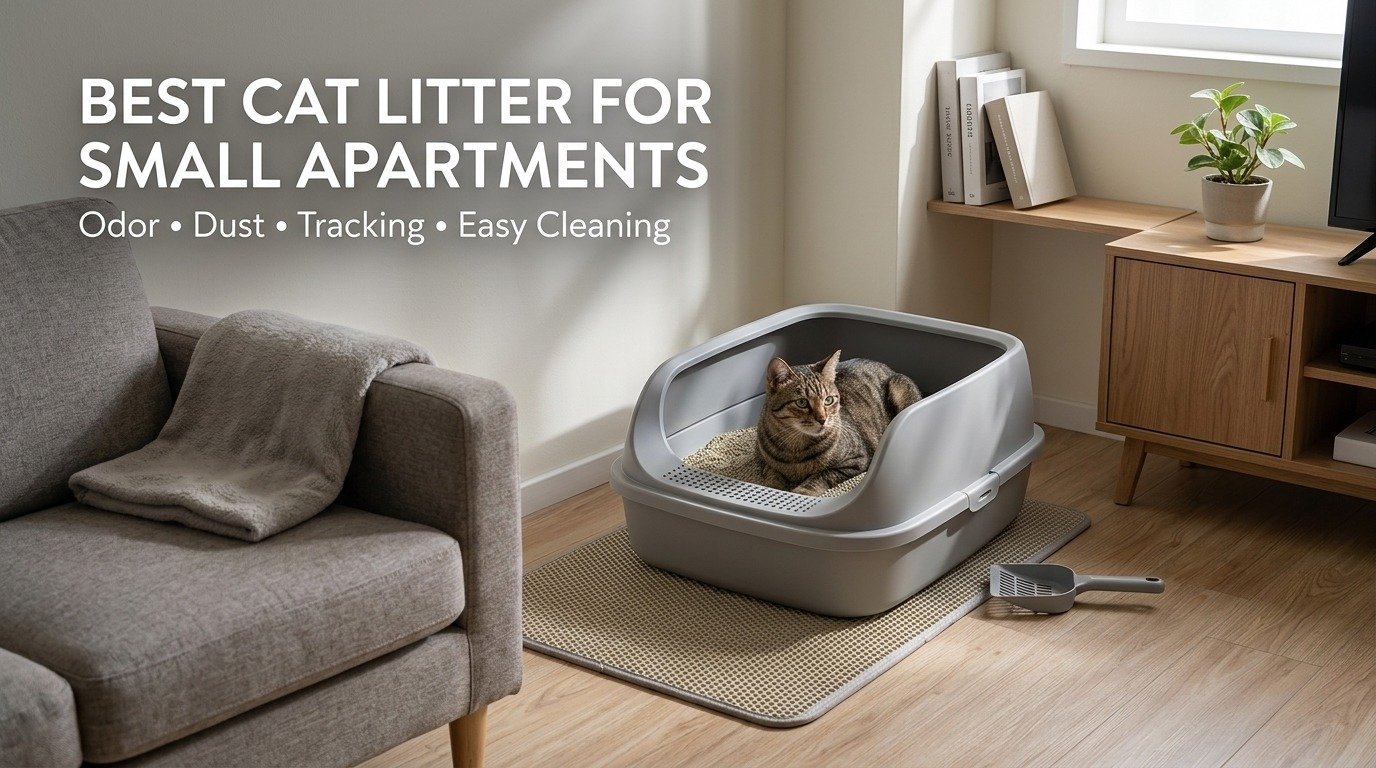
Living with a cat in a small apartment can be great—but the litter box can quickly become one of the biggest challenges.
In a large house, you can hide the litter box in a basement, spare bathroom, or laundry room. In a small apartment, there may be nowhere to hide it. The litter box might be only a few steps away from your sofa, kitchen, or bedroom.
That makes odor, dust, and tracking much more noticeable.
So, what is the best cat litter for small apartments?
The answer isn’t simply the most expensive or most heavily scented litter. You need a litter that controls odor, produces little dust, doesn’t track everywhere, and is easy to clean—while still being comfortable for your cat.
Let’s look at what actually matters.
What Makes a Cat Litter Good for a Small Apartment?
Before buying a new litter, ask yourself:
What is the biggest problem with my current litter?
Is it:
- Bad odor?
- Litter all over the floor?
- Too much dust?
- Weak clumping?
- Difficult cleaning?
- Your cat refusing to use it?
Once you know the problem, choosing the right litter becomes much easier.
For most apartment owners, the ideal litter should have these five qualities:
| Feature | Why It Matters |
| Strong odor control | Keeps smells from spreading through the apartment |
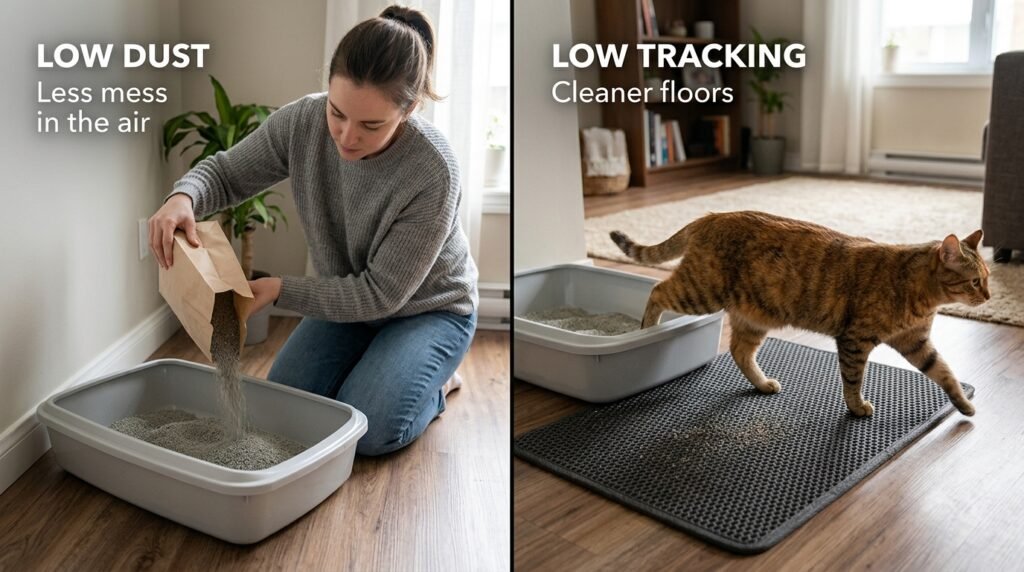
| Low dust | Helps keep floors and furniture cleaner |
| Low tracking | Reduces litter around the home |
| Firm clumping | Makes scooping easier |
| Cat-friendly texture | Encourages your cat to use the box |
You don’t necessarily need the most expensive litter.
You need the right combination of features.
1. Is Odor Control Really That Important?
Yes—especially in a small apartment.
When the litter box is close to your living area, even a small amount of odor can become noticeable.
The problem isn’t usually the cat itself. It is what happens when urine and feces remain in the litter for too long.
A good litter can help contain moisture and odors, but it cannot replace regular cleaning.
What should you look for?
Look for litter that offers:
- Good moisture absorption
- Strong clumping
- Effective odor control
- Low dust
- Easy scooping
And remember:
Strong fragrance does not automatically mean strong odor control.
A heavily scented litter may simply cover the smell instead of dealing with the source.
For an apartment, actual odor control is much more useful than an overpowering perfume.
2. Should You Choose Low-Dust Cat Litter?
If you live in a small apartment, low dust is definitely worth considering.
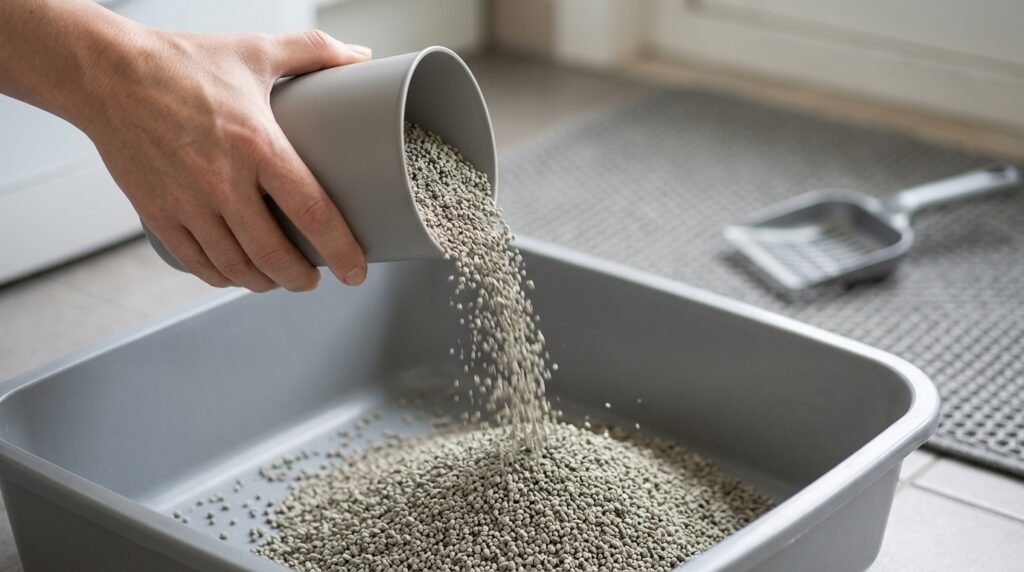
Every time your cat digs, jumps out of the litter box, or you refill the box, fine particles can become airborne.
Eventually, that dust can settle on:
- Floors
- Furniture
- Shelves
- Bathroom surfaces
- Electronics
And nobody wants to clean litter dust every day.
How can you tell if litter is too dusty?
Pay attention when you pour it into the box.
If you immediately see a large cloud of dust, that’s a warning sign.
Look for products marketed as:
Low dust, reduced dust, or dust-free.
Keep in mind that “dust-free” claims vary between products, so real-world performance matters more than the label alone.
3. How Do You Stop Cat Litter From Getting Everywhere?
This is one of the biggest complaints from apartment cat owners.
Your cat uses the litter box.
It walks out.
And suddenly there are tiny pieces of litter across the floor.
This is called litter tracking.
Tracking depends on the litter itself, but your cat’s paws, fur, digging habits, and litter-box design also play a role.
How can you reduce tracking?
Try these simple steps:
Use low-tracking litter.
Some formulas are designed to stay in the box better.
Place a litter mat outside the box.
A good mat can catch particles from your cat’s paws.
Don’t overfill the box.
More litter can mean more litter kicked onto the floor.
Choose the right litter box.
A high-sided box can reduce litter being thrown out during digging.
You probably won’t eliminate tracking completely.
The goal is to make it manageable.
4. Why Is Clumping Litter Popular for Apartments?
Imagine cleaning your cat’s litter box and having to replace almost everything every time your cat urinates.
That’s where clumping litter becomes useful.
When your cat urinates, clumping litter forms a solid mass around the moisture. You can scoop it out and leave the clean litter behind.
This makes daily cleaning much easier.
Why is this useful in a small apartment?
Because regular scooping means:
Less waste sitting in the box → less odor → easier cleaning.
Good clumping litter should form firm clumps that don’t immediately break apart when you scoop them.
If the clump falls apart, urine can remain at the bottom of the box, eventually creating a stronger smell.
Which Type of Cat Litter Is Best for Apartments?
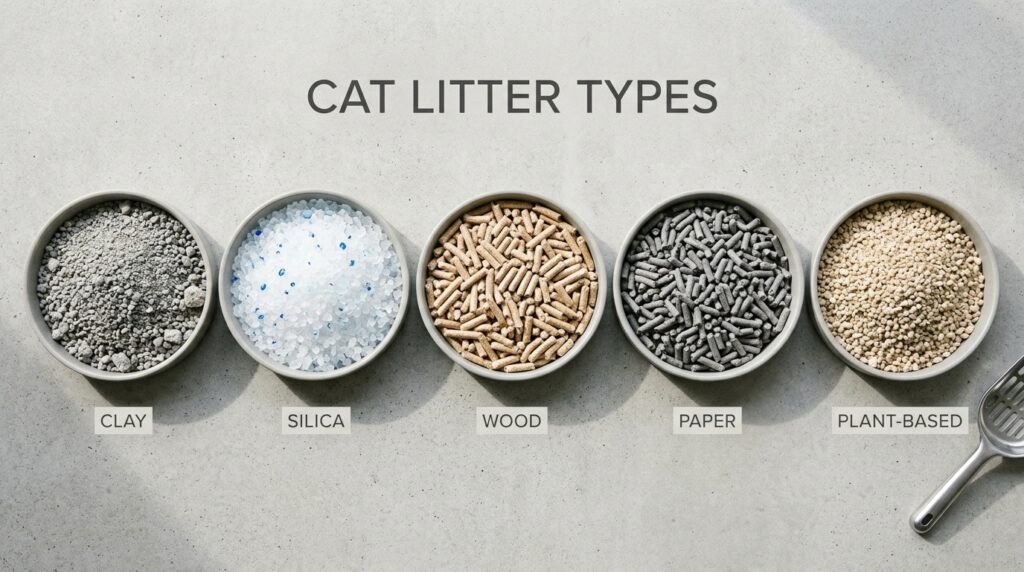
There are several types of cat litter, and each has advantages and disadvantages.
Clumping Clay Litter
One of the most common choices.
Pros:
- Strong clumping
- Easy to scoop
- Widely available
- Many odor-control options
- Familiar texture for many cats
Cons:
- Some products can be dusty
- Some can track significantly
For apartment owners, look for a low-dust, low-tracking clumping formula.
Silica Gel Litter
Silica crystals absorb moisture and can provide good odor management.
Pros:
- Good moisture absorption
- Can provide good odor control
- Often lasts for a reasonable period
Cons:
- Some cats dislike the crystal texture
- Can feel different from traditional litter
If your cat accepts it, silica can be a practical option.
Wood or Pine Litter
Wood-based litter is another alternative.
Pros:
- Natural-looking material
- Different texture from traditional clay
- Available in pellet forms
Cons:
- Some cats dislike pellets
- Urine management differs between products
Paper Litter
Paper litter is often made into pellets or soft pieces.
It can work well for certain cats, but it behaves differently from clumping clay.
If easy urine removal is your top priority, compare the specific product carefully.
Plant-Based Litter
Plant-based litter can be made from materials such as corn, wheat, cassava, or other plant materials.
Some products offer good clumping and odor control.
However, don’t choose a litter just because it says “natural.”
Look at its actual performance.
Does it control odor?
Does it clump?
Does it track?
Does your cat use it?
Those questions matter more.
What About Scented vs. Unscented Cat Litter?
This is a common question.
Is scented litter better?
Not necessarily.
A pleasant fragrance can make the litter smell better to humans, but your cat may not feel the same way.
Cats have a much stronger sense of smell than we do, so an overpowering fragrance may be unpleasant for some cats.
If your cat already uses unscented litter happily, there may be no reason to change.
What about odor?
Unscented doesn’t mean odor-producing.
A good unscented litter can still control odors effectively through moisture absorption and waste management.
For many households, mildly scented or unscented litter with good odor control is a better choice than extremely strong fragrance.
Where Should You Put a Litter Box in a Small Apartment?
Choosing the litter is only half the job.
The location of the litter box can make a huge difference.
Look for a place that is:
- Quiet
- Accessible
- Well ventilated
- Easy to clean
- Away from food and water
- Not constantly disturbed by people
Should you hide the litter box?
You can, but don’t hide it so well that your cat struggles to reach it.
A litter box inside a cramped cabinet might save space, but poor ventilation and difficult access can create new problems.
And remember:
If the litter box is inconvenient for you to clean, you’ll probably clean it less often.
Convenience matters.
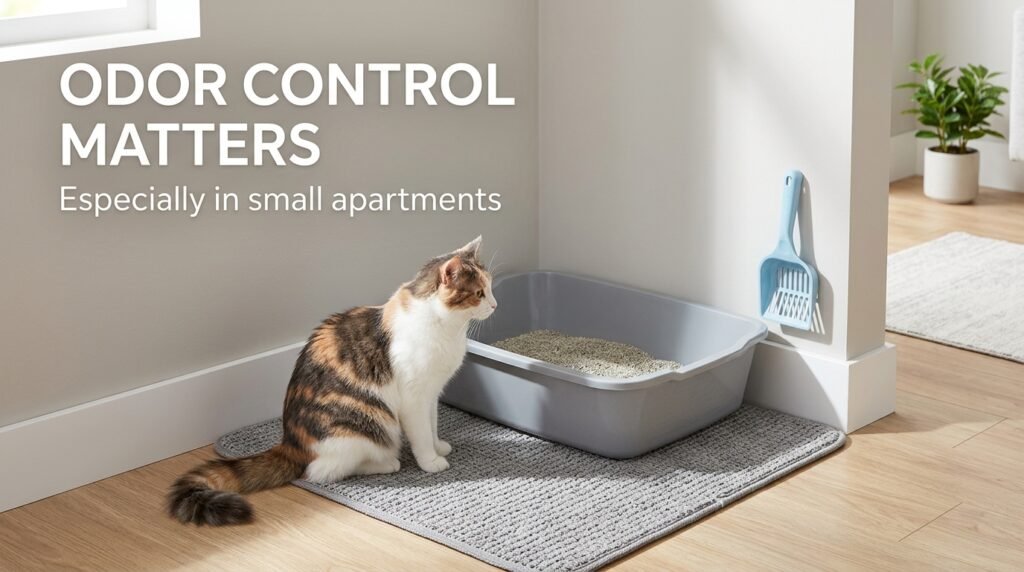
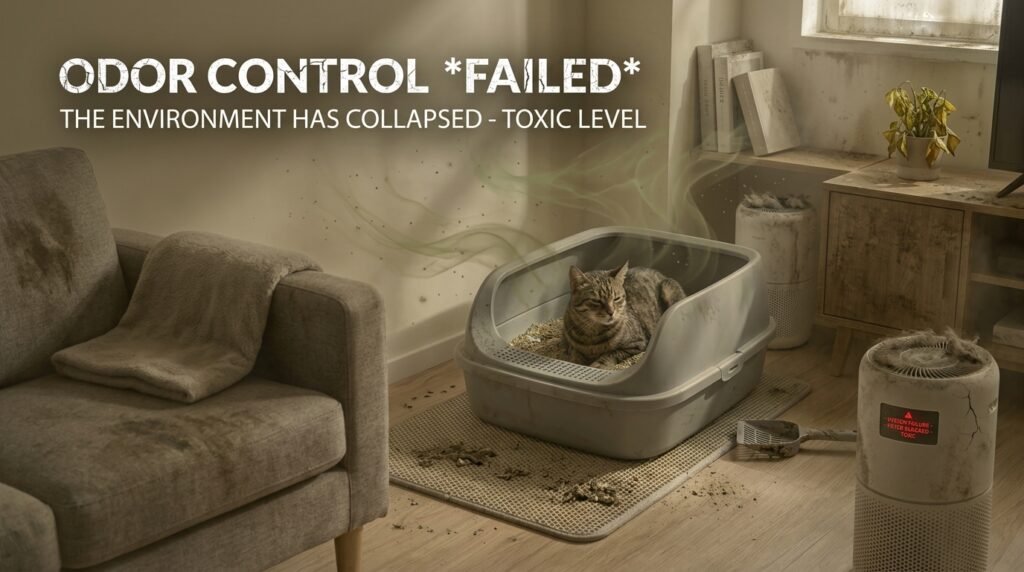
How Can You Stop Your Apartment From Smelling Like a Litter Box?
You don’t need to rely on air fresheners.
Start with the basics.
Scoop regularly
Remove feces and urine clumps at least once or twice a day when practical.
Keep enough fresh litter in the box
Too little litter can allow urine to reach the bottom.
Clean the box
Even excellent litter needs a clean litter box.
Improve ventilation
Fresh airflow can help prevent odors from becoming concentrated.
Keep the surrounding area clean
Tracked litter and waste around the box can also contribute to unpleasant smells.
Use good odor-control litter
If you’re already doing everything correctly but the smell remains strong, the litter itself may be the weak point.
Can Air Fresheners Fix Cat Litter Odor?
Not really.
They may make the room smell different, but they don’t remove the source of the odor.
In some cases, strong fragrances can make the environment less pleasant for your cat.
Instead, deal with the source:
Scoop → clean → control moisture → ventilate.
That’s a much better long-term strategy.
What If My Cat Doesn’t Like the New Litter?
This is where many owners make a mistake.
You find a litter with excellent odor control and buy a large bag.
Then your cat refuses to use it.
The problem?
Your cat wasn’t consulted.
Cats can have strong preferences about litter texture and smell.
If you’re switching litter, introduce it gradually instead of replacing the old litter overnight.
You can start by mixing a small amount of the new litter with the old one and gradually increase the amount.
What if your cat suddenly stops using the litter box?
Don’t automatically assume the litter is the problem.
Changes in litter-box behavior can have environmental or medical causes. If the behavior is sudden, persistent, or unusual, speaking with a veterinarian is appropriate.
What Is the Best Litter Box for a Small Apartment?
The smallest box isn’t necessarily the best box.
Your cat needs enough space to:
- Enter comfortably
- Turn around
- Dig
- Cover waste
- Find a comfortable position
A box that saves a few inches of floor space but makes your cat uncomfortable isn’t a good solution.
Open or covered?
Both can work.
A covered box can help contain some litter and visually hide the waste.
But some cats prefer open boxes because they feel less confined.
If your cat clearly prefers one style, that preference should win.
What Should You Look for When Buying Cat Litter?
Instead of staring at dozens of brands, use this quick checklist.
Look for:
✓ Strong clumping
Makes scooping easier.
✓ Good odor control
Especially important in apartments.
✓ Low dust
Helps reduce mess around the home.
✓ Low tracking
Keeps your floors cleaner.
✓ Cat-friendly texture
Your cat needs to accept it.
✓ Reasonable value
Don’t judge value only by the price of the bag.
A litter that clumps poorly may require more frequent replacement, making a cheap bag more expensive over time.
Quick Comparison: Which Litter Should You Choose?
| If Your Main Problem Is… | Consider… |
| Strong odor | Clumping litter with good odor control |
| Litter on the floor | Low-tracking litter + litter mat |
| Dust everywhere | Low-dust litter |
| Difficult scooping | Firm-clumping litter |
| Cat dislikes fragrance | Unscented litter |
| Limited storage | Efficient litter that doesn’t require excessive replacement |
| Multiple cats | Strong odor control + excellent clumping |
The important thing is to solve your actual problem rather than buying whatever litter has the most impressive packaging.
What About Apartments With Multiple Cats?
Two cats mean more litter-box traffic.
That means:
More urine + more feces + more digging = more cleaning.
If you have multiple cats, odor control becomes even more important.
Ideally, cats should have access to multiple litter boxes. However, apartment owners may have limited space.
If you cannot provide many boxes, focus on keeping the available boxes exceptionally clean and accessible.
Don’t expect stronger fragrance to compensate for insufficient litter-box management.
7 Simple Ways to Improve Your Apartment Litter Setup
You don’t necessarily need expensive equipment.
Try these simple improvements:
1. Put a litter mat outside the box
It catches loose litter before it spreads.
2. Keep a scoop nearby
If the scoop is right beside the box, you’re more likely to clean it regularly.
3. Use a small waste container
This makes daily waste removal easier.
4. Keep the box away from food
Cats generally prefer separation between eating and toileting areas.
5. Vacuum around the box regularly
Don’t wait until litter has spread throughout the apartment.
6. Don’t overfill the box
Use enough litter for comfortable digging without creating unnecessary mess.
7. Make cleaning easy
The best setup is one you can maintain consistently.
Frequently Asked Questions
What is the best cat litter for small apartments?
The best option is usually a litter that combines strong odor control, low dust, low tracking, and reliable clumping. However, your cat’s preference should always be considered.
Is clumping litter better for apartment living?
For many owners, yes. Clumping litter makes it easier to remove urine and feces without replacing all of the litter every time.
How do I keep my apartment from smelling like cat litter?
Scoop regularly, keep the litter box clean, use good odor-control litter, maintain an appropriate litter level, and provide reasonable ventilation.
Is scented litter a good idea?
It can be, but strong fragrance isn’t necessarily better. Some cats prefer unscented or lightly scented litter.
How can I stop litter from spreading around my apartment?
Use low-tracking litter, a litter mat, an appropriate litter box, and regular sweeping or vacuuming.
How often should I scoop?
Once or twice daily is a practical routine for many households. Multiple-cat homes may require more frequent scooping.
Can I put a litter box in my bedroom?
You can if necessary, but it should be kept clean and positioned away from your sleeping area when possible. Good ventilation becomes particularly important.
Does expensive litter work better?
Not always. Price doesn’t guarantee performance. Look at clumping, odor control, dust, tracking, and how much litter you actually use.
What if my cat refuses the new litter?
Switch gradually rather than replacing the old litter immediately. If your cat continues avoiding the box or suddenly changes its bathroom habits, investigate the cause and consult a veterinarian when appropriate.
Final Thoughts
Living in a small apartment with a cat doesn’t mean your home has to smell like a litter box or have litter scattered across the floor.
The secret is not one magical product.
It’s the right combination of litter and routine.
Look for:
Low dust + low tracking + strong odor control + reliable clumping + cat acceptance.
Then pair the litter with a properly sized box, a litter mat, regular scooping, and a sensible location.
Most importantly, don’t choose litter based only on what looks or smells good to you.
Your cat has to use it.
The best cat litter for small apartments is ultimately the one that keeps your home manageable while giving your cat a comfortable and reliable place to do its business.
A little attention to the litter you choose—and how you maintain it—can make apartment life significantly easier for both of you.