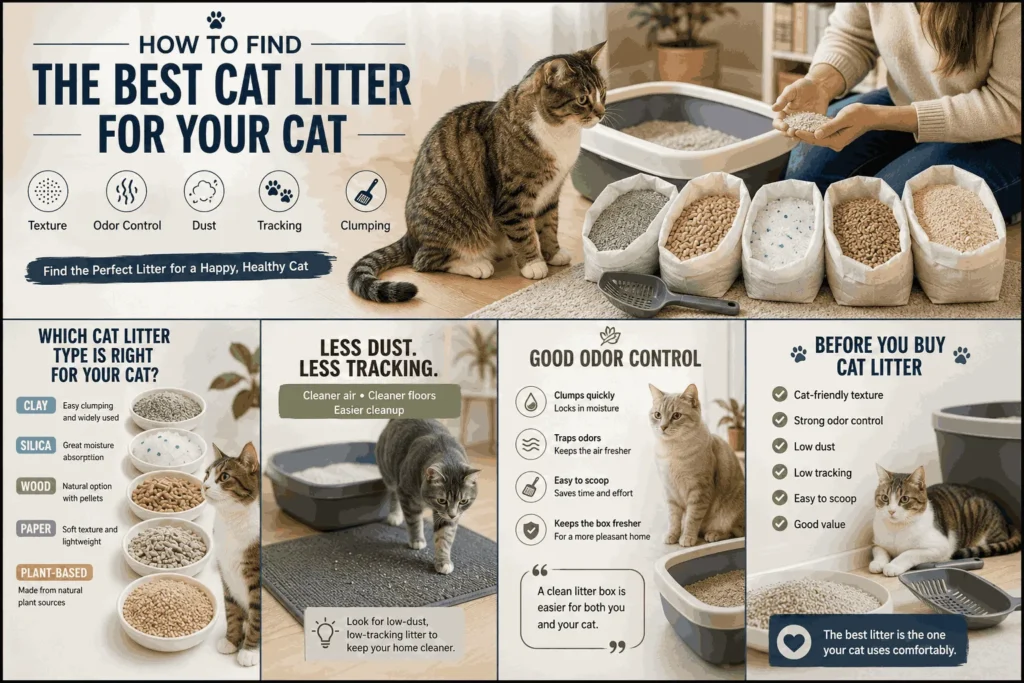
Choosing cat litter sounds simple.
Walk into a pet store, pick a bag, and you’re done.
But if you’ve ever bought a litter your cat refused to use, tracked through the entire house, or discovered that smelled terrible after only a few days, you already know the reality.
So, how to find the best cat litter for your cat?
The answer isn’t the most expensive brand or the litter with the strongest fragrance.
The best litter is the one that works for your cat, your home, and your cleaning routine.
The best cat litter isn’t necessarily the best-selling one. It’s the one your cat comfortably uses and you can easily maintain.
In this guide, we’ll look at the different types of cat litter, what cats actually prefer, how to compare products, and how to switch litter without creating unnecessary problems.
What Should You Look for in Cat Litter?
Before looking at brands, ask yourself a few simple questions:
Does my cat like the current litter?
Is odor a problem?
Does the litter create too much dust?
Is it getting tracked around the house?
Is it easy to scoop?
How much am I willing to spend every month?
These questions are more useful than simply asking, “Which cat litter is the best?”
A good cat litter should ideally provide:
- Good odor control
- Low dust
- Low tracking
- Easy cleaning
- Comfortable texture
- Reliable moisture absorption
- Good value for money
But there is one factor that matters more than all the others.
Your cat has to accept it.
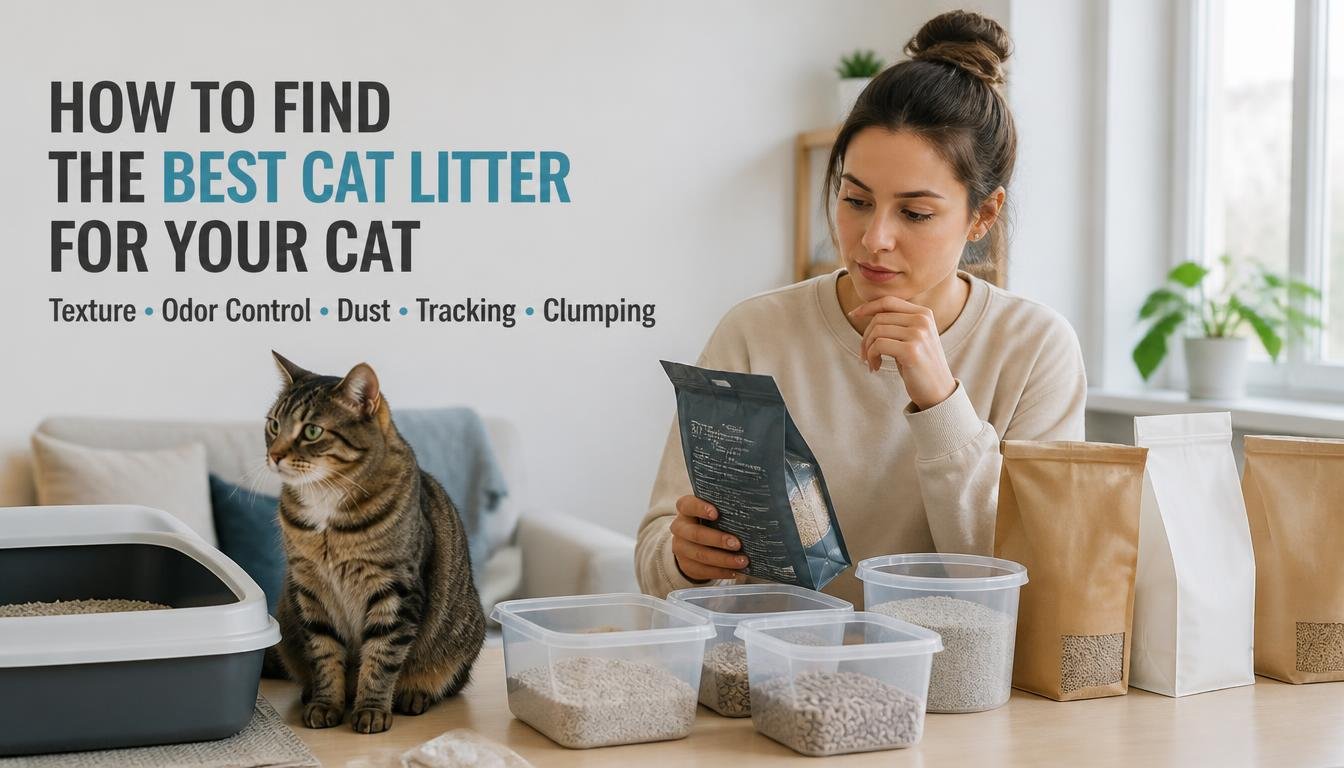
Does Your Cat Actually Care Which Litter You Buy?
Yes.
This is one of the biggest things cat owners overlook.
You may care about the smell, packaging, price, or brand.
Your cat doesn’t.
Your cat cares about how the litter feels under its paws, smells, and behaves when digging and covering waste.
Some cats prefer fine, sand-like litter.
Others may accept larger granules or pellets.
Some dislike strong fragrances.
Others may have no obvious preference.
This is why there isn’t one litter that every cat will love.
What if your cat suddenly stops using the litter box?
Don’t immediately blame the litter.
A change in litter-box behavior can have several causes, including environmental stress or health problems.
If your cat suddenly stops using the box, urinates outside it repeatedly, strains, or shows other unusual bathroom behavior, speak with a veterinarian.
A litter change should not be used to explain away a potentially medical problem.
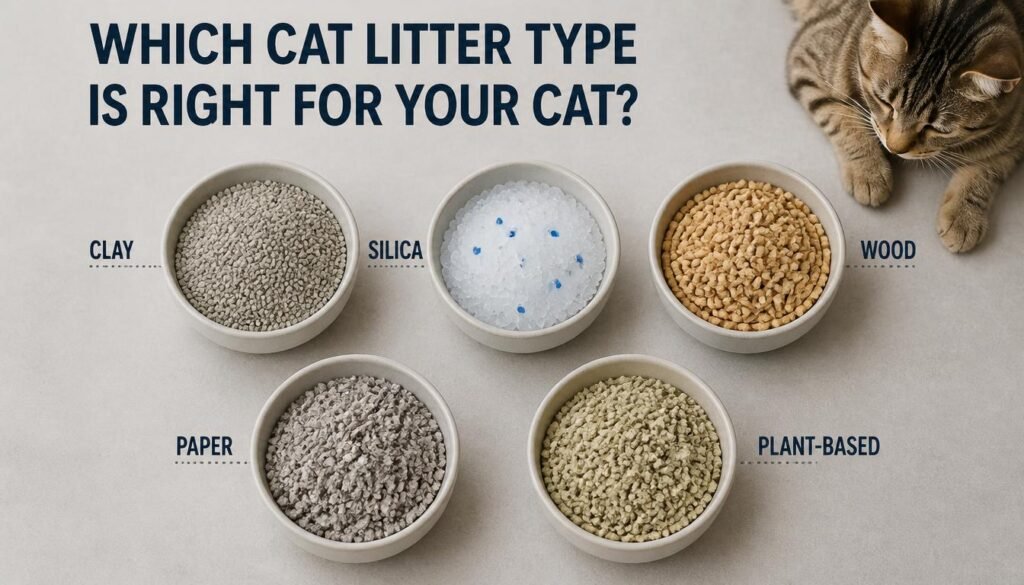
Which Type of Cat Litter Is Best?
There are several major types of cat litter.
Each has advantages.
The right choice depends on your cat and what you want from the litter.
1. Clumping Clay Litter
Clumping clay is one of the most popular choices.
When moisture reaches the litter, it forms a clump that can be removed with a scoop.
Why do people like it?
Because cleaning is simple.
You remove the urine clump and feces while leaving the remaining clean litter behind.
Advantages:
- Easy to scoop
- Usually strong clumping
- Widely available
- Many odor-control options
- Familiar texture for many cats
Potential disadvantages:
- Some products can be dusty
- Some formulas track easily
- Heavier bags can be inconvenient to carry
If you’re looking for convenience, a low-dust, low-tracking clumping litter can be a strong option.
2. Silica Gel Cat Litter
Silica litter contains absorbent crystals that help manage moisture.
Some owners like it because it can provide good odor control and doesn’t require the same type of clumping as clay.
Is silica litter good for every cat?
No.
The texture is different from traditional fine-grain litter.
Some cats accept it immediately.
Others don’t.
If your cat is comfortable with silica, it can be a practical option.
3. Wood or Pine Litter
Wood-based litter is another popular alternative.
It may come in pellets or other forms.
What are the benefits?
Wood litter can provide a different texture and may appeal to owners looking for alternatives to traditional clay.
However, pellets can feel very different under a cat’s paws.
If your cat prefers soft, fine litter, it may take some time to adjust.
4. Paper Cat Litter
Paper litter is often available as pellets or soft pieces.
It can be useful in certain situations and is generally quite different from clay in texture and behavior.
The important thing is to look at the actual product.
Not every paper litter behaves the same way.
5. Plant-Based Cat Litter
Plant-based litter can be made from materials such as corn, wheat, cassava, and other plant materials.
Some plant-based formulas offer clumping and odor control.
Is “natural” automatically better?
No.
This is an important distinction.
A litter being marketed as natural doesn’t automatically mean it will be the best option for your cat.
Ask:
Does my cat like it?
Does it control odor?
Does it clump properly?
Does it create too much dust?
Does it track everywhere?
Performance matters.
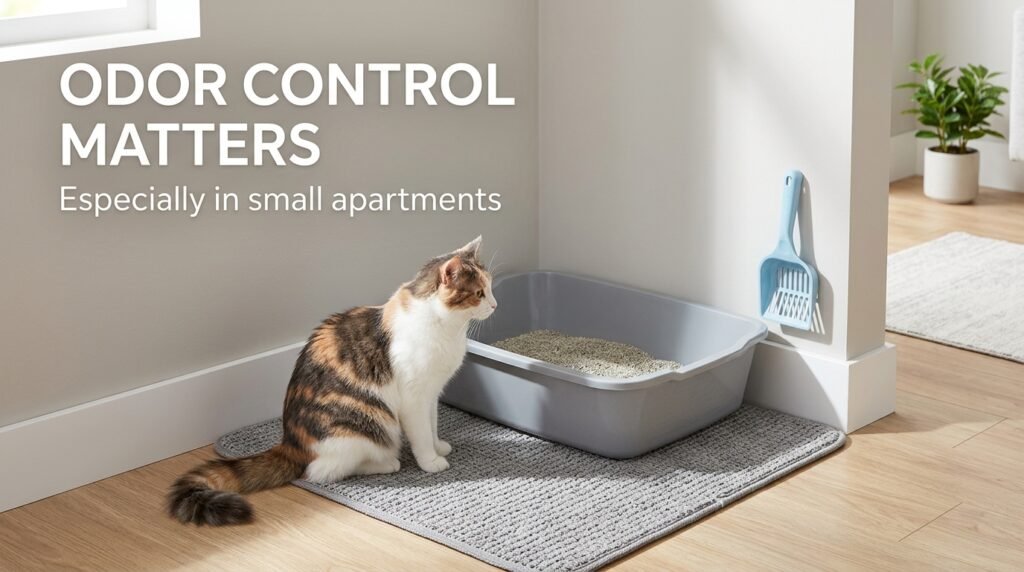
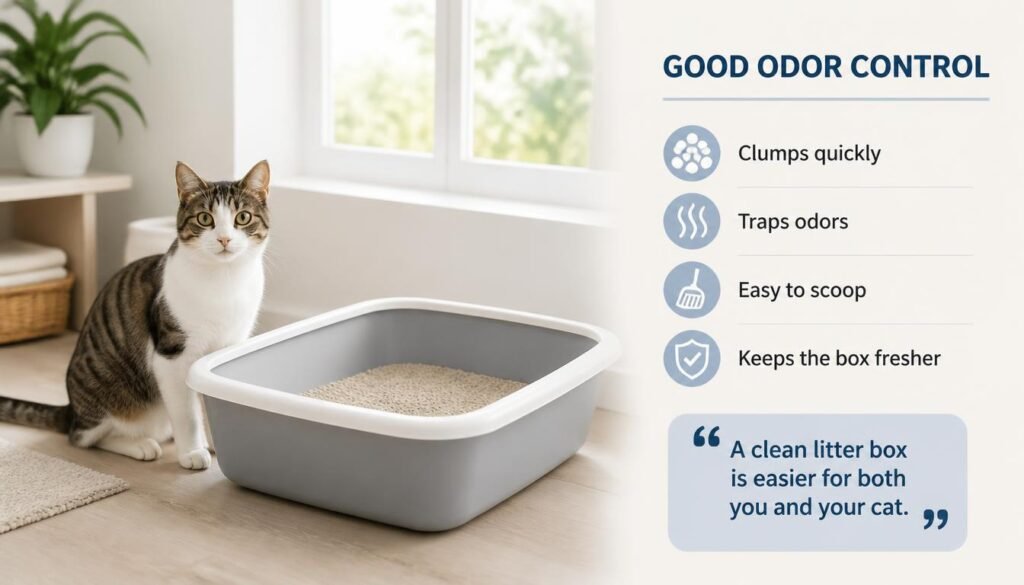
How Important Is Odor Control?
Very important.
Especially if your litter box is inside your home.
A litter box can quickly become the most noticeable source of odor if waste isn’t removed regularly.
But here’s the mistake many owners make:
They assume strong fragrance = strong odor control.
That’s not necessarily true.
A heavily scented litter can cover unpleasant smells without actually managing the source.
Good odor management starts with:
Absorption + clumping + regular scooping + a clean litter box.
The litter itself is only one part of the equation.
How often should you scoop?
For many households, once or twice a day is a practical routine.
If you have multiple cats, you may need to scoop more frequently.
The longer waste remains in the box, the more opportunity there is for odors to develop.
Don’t ask only, “Does this litter smell good?” Ask, “How well does this litter manage waste?”
Should You Choose Scented or Unscented Cat Litter?
This is one of the most common questions.
There isn’t one answer for every cat.
Some cats tolerate scented litter perfectly well.
Others prefer unscented litter.
And some may actively avoid a litter with a strong fragrance.
Remember that cats have a much stronger sense of smell than humans.
A fragrance that seems mild to you may be much stronger from your cat’s perspective.
So which should you choose?
If your cat already uses an unscented litter happily, there may be no reason to change.
If you’re trying scented litter, choose a moderate fragrance rather than assuming the strongest scent will provide the best odor control.
Is Low-Dust Cat Litter Better?
For many homes, yes.
Dust can become a nuisance quickly.
Your cat digs.
You refill the box.
Your cat jumps out.
Fine particles can spread into the surrounding area.
Over time, dust may settle on floors, furniture, and other surfaces.
What should you look for?
Look for products described as:
- Low dust
- Reduced dust
- Low-dust formula
Don’t rely solely on marketing claims.
When you actually pour the litter into the box, observe how much dust becomes airborne.
A good litter should make routine maintenance easier—not create another cleaning job.
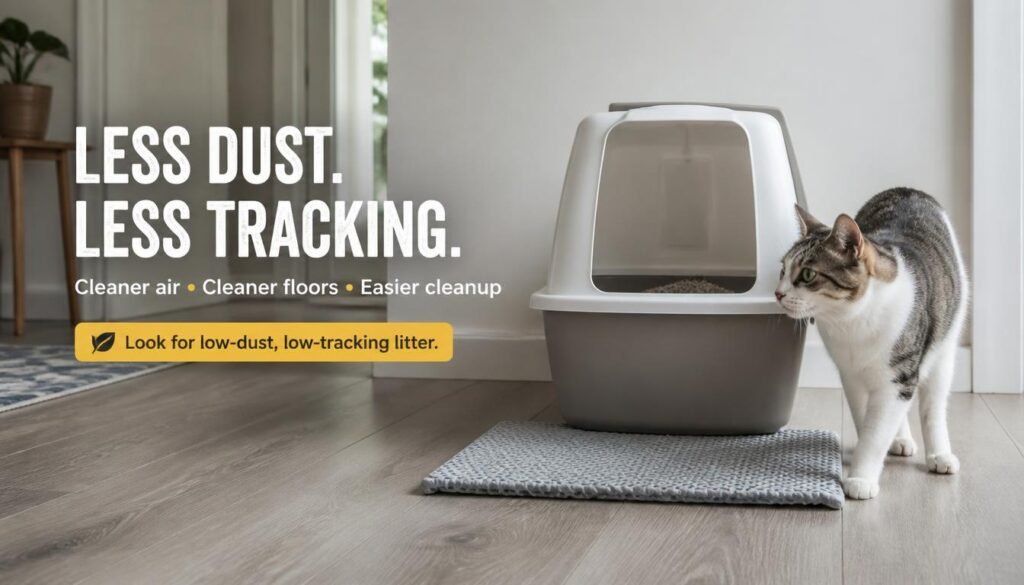
What About Litter Tracking?
If you’ve ever found litter beside your bed, under your sofa, or halfway across the hallway, you already know how annoying tracking can be.
Tracking happens when litter sticks to your cat’s paws or fur and gets carried outside the box.
Some litter types track more than others.
But litter isn’t the only factor.
How can you reduce tracking?
Try these simple solutions:
Use low-tracking litter.
Choose a formula designed to stay in the box better.
Use a litter mat.
Place it directly outside the box.
Don’t overfill the box.
Too much litter can be kicked out during digging.
Keep the area clean.
Even low-tracking litter won’t eliminate every stray piece.
The goal isn’t zero tracking. The goal is tracking you can easily manage.
Does Your Cat Prefer Fine or Coarse Litter?
This can make a surprising difference.
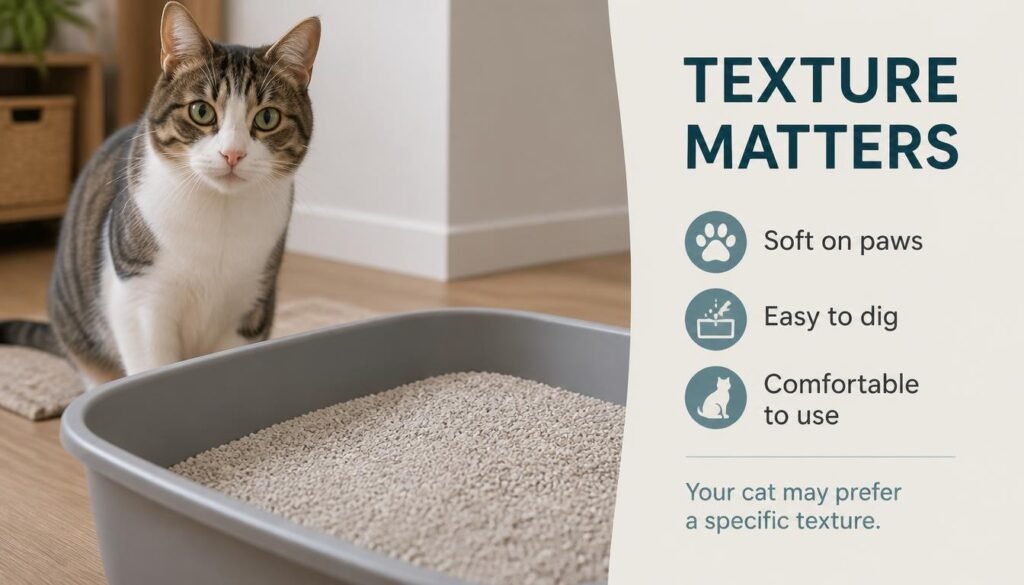
Many cats appear to prefer a texture that feels comfortable under their paws.
Fine-grain litter often feels more like natural soil or sand.
Coarser litter and pellets provide a very different experience.
What should you do?
Watch your cat.
Does your cat dig enthusiastically?
Does it avoid stepping into certain types of litter?
Does it spend a long time trying to find a comfortable place?
Your cat’s behavior can give you useful clues.
If your cat is happily using the current litter, changing its texture without a good reason may be unnecessary.
How Much Does Cat Litter Cost?
Price matters.
But don’t compare litter only by the price printed on the bag.
Consider cost per use.
A cheaper litter that doesn’t clump properly may need to be replaced more frequently.
A more expensive litter that clumps well and controls odor may last longer.
Ask yourself:
How much litter does the product require?
How often do I need to replace it?
How much waste gets thrown away with each cleaning?
How many cats are using the box?
This gives you a much better idea of value.
What Is the Best Cat Litter for a Kitten?
Kittens can have different needs from adult cats.
They are still learning litter-box habits and may explore the box by digging, playing, or even investigating the litter with their mouths.
Choose litter carefully and follow the guidance appropriate for your kitten’s age.
The most important consideration is that the litter is safe and that the kitten can comfortably use the box.
If you’re unsure which litter is appropriate for a very young kitten, ask your veterinarian.
What Is the Best Cat Litter for Multiple Cats?
Multiple cats create a different challenge.
More cats mean more:
- Urine
- Feces
- Odor
- Tracking
- Litter consumption
In a multi-cat household, odor control and clumping become especially important.
But there’s another issue:
Do your cats have enough litter boxes?
A commonly recommended guideline is one litter box per cat, plus one additional box.
Real homes don’t always have enough space for that arrangement.
If you have limited space, provide as many suitable boxes as practical and keep them clean and accessible.
How Do You Know If Your Cat Dislikes Its Litter?
Your cat may not exactly tell you.
Instead, watch its behavior.
Possible signs include:
- Avoiding the litter box
- Hesitating before entering
- Quickly jumping out
- Urinating or defecating outside the box
- Excessive attempts to cover waste
- Suddenly changing bathroom habits
One sign alone doesn’t prove the litter is the problem.
But a pattern is worth investigating.
What should you do?
Check the basics first.
Is the box clean?
Is the litter new?
Did the texture change?
Is the fragrance stronger?
Is the box too small?
Has the location changed?
If everything changed at the same time, you’ve made troubleshooting much harder.
How Should You Introduce a New Cat Litter?
Don’t dump out the old litter and fill the box with something completely different unless you have a specific reason to do so.
Your cat may reject it.
Instead, transition gradually.
Start by adding a small amount of the new litter alongside the old litter.
Then slowly increase the proportion over time.
Watch your cat’s behavior throughout the process.
If your cat continues using the box normally, you can continue the transition.
If your cat strongly rejects the new litter, reconsider the switch.
What Should You Never Ignore When Choosing Cat Litter?
Don’t ignore your cat’s behavior.
Don’t ignore excessive dust.
Don’t ignore persistent odor.
And don’t ignore sudden changes in litter-box habits.
A litter box is not simply a container filled with something disposable.
It is an important part of your cat’s daily environment.
Your cat interacts with it every day.
That makes comfort, cleanliness, and accessibility important.
A Quick Cat Litter Buying Checklist
Before buying a new product, ask these questions:
For your cat:
Does my cat like the texture?
Does my cat tolerate the fragrance?
Does my cat use this litter comfortably?
For your home:
Does it control odor?
Does it create dust?
Does it track everywhere?
For you:
Is it easy to scoop?
Is it affordable long-term?
Is it easy to store?
If the answer is “yes” to most of these questions, you’ve probably found a good candidate.
Best Cat Litter: What Matters Most?
If you want to simplify everything we’ve discussed, use this priority list.
1. Cat acceptance
Your cat must actually use it.
2. Cleanliness
The litter should make waste removal easy.
3. Odor control
Especially important for indoor cats and apartments.
4. Low dust
Less mess around the litter box.
5. Low tracking
Cleaner floors and furniture.
6. Price
Compare the overall value, not just the bag price.
This order prevents a common mistake: choosing litter based on marketing rather than actual performance.
Frequently Asked Questions
How do I find the best cat litter for my cat?
Start with your cat’s current preferences. Consider texture, fragrance, clumping, dust, tracking, odor control, and price. The best litter is the one your cat accepts while meeting your household’s practical needs.
What type of cat litter do most cats prefer?
Many cats appear to prefer fine-textured, sand-like litter, but individual preferences vary. Your cat’s behavior is the best indicator.
Is clumping litter better than non-clumping litter?
Clumping litter is often easier to maintain because urine can be removed as a solid clump. However, the best choice depends on your cat’s preferences and the specific product.
Is scented cat litter bad for cats?
Not necessarily, but some cats dislike strong fragrances. If your cat avoids scented litter, an unscented alternative may be more suitable.
How can I tell if cat litter is low dust?
Look for a low-dust formula and observe how much dust becomes airborne when you pour or scoop it. Marketing claims can vary, so real-world performance matters.
Why does my cat throw litter everywhere?
Digging behavior, litter texture, the amount of litter in the box, and the box design can all contribute. A litter mat and high-sided box can help reduce the mess.
How often should cat litter be changed?
The answer depends on the litter type, number of cats, litter-box size, and cleaning routine. Scoop waste regularly and follow the product’s recommendations for complete litter replacement.
Can I suddenly change my cat’s litter?
You can, but a gradual transition is usually less disruptive. Sudden changes may cause some cats to reject the new litter.
What if my cat stops using the litter box?
First check the litter, box cleanliness, box size, location, and recent environmental changes. If the behavior is sudden or persistent, consult a veterinarian because litter-box avoidance can sometimes indicate a medical problem.
Is expensive cat litter better?
Not automatically. A more expensive product isn’t necessarily better. Compare clumping, odor control, dust, tracking, cat acceptance, and cost per use.
Final Thoughts
So, how to find the best cat litter for your cat?
Don’t start with the brand.
Start with your cat.
Look at what your cat already likes. Then consider the problems you’re trying to solve.
If odor is your biggest issue, prioritize odor control.
If litter is covering your floor, focus on tracking.
If dust is becoming a daily nuisance, choose a low-dust formula.
If cleaning is frustrating, look for strong, easy-to-remove clumps.
And if your cat refuses the litter, none of those features matter.
The best litter is the one that makes life easier for you without making the litter box uncomfortable for your cat.
There is no universal winner.
There is only the litter that fits your cat, your home, and your routine.
Take the time to observe your cat, make changes gradually, and judge litter by real-world performance rather than attractive packaging or bold marketing claims.
That’s how you find a litter that works—not just for the first week, but for everyday life.